

Castles & Crusades: Castle Keepers Guide
Castles & Crusades: Castle Keepers Guide
Couldn't load pickup availability
Building Upon Foundations of Stone
Beneath the ground upon which the adventurer treads, lies the foundation. Above it is the construct, walls and towers of adventure, which drives even more challenges, more flavor of a world’s imaginings to light. It is the maelstrom of creation through whose eye the game of heroic chance plays out.
Expand Your Game!
The Castle Keepers Guide includes a host of new material for the role playing enthusiast; from world creation, to dungeon designs, managing non-player characters, character attributes at high levels, spell use and cost, equipment, its use and wastage, the tumult of storms, warfare, combat, monsters, treasure, death, and more. It provides the CK and the player with a host of new tools for their use — tools designed to enhance play, not hinder it — designed to be malleable from gaming table to gaming table.
It includes expanding the character, magic and mana, expanding equipment, NPCs, world building, cities, dungeons, air and water adventures, equipment wastage, using land as treasure with titles, going to war, monster ecology, futuristic settings, advancing the game, Siege Engine expansions, treasure, personal combat rules, skill packages, critical hit tables, and dealing with character death!
What You Find In The C&C Castle Keepers Guide:
- Expanding the Character: In this chapter we explore new attribute modifiers, godlike attributes, beauty as an attribute, creating new races, and roleplaying examples.
- Magic: Digging into the magic-using classes with spellbooks, starting spells, components, pricing magical components, playing without components, wands and holy symbols, illusion magic as healing, buying, selling and trading spells, scroll use, non-caster scroll use, and so much more.
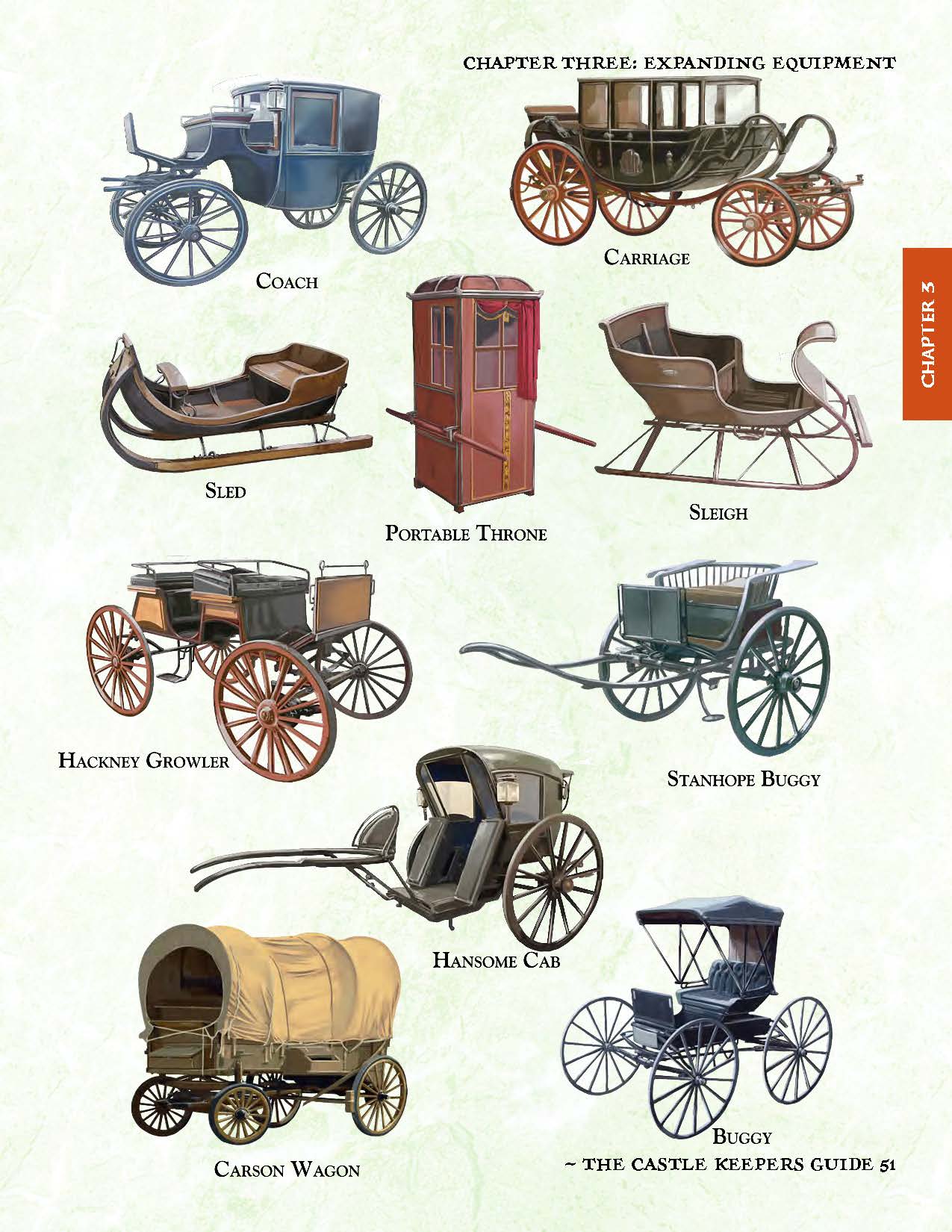
- Expanding Equipment: A fresh look at equipment includes types of carrying items, stabling, costs of lodging and meals, a complete illustrated study of wagons with costs, speed and cargo, a similar treatment of boats and ships, general equipment, and a new look at backpacks (abbreviated from the Adventurers Backpack).
- NPCs: A complete breakdown and explanation of the three types of NPCs (Adherents, Hirelings, and Henchmen), how to use them, what their skills are, tracking loyalty, hiring them permanently or part-time, and developing their personalities.
- World Building: A guide on building your own world, beginning with planetary design and exploring everything from plate tectonics to weathering. Ten different types of climates are discussed along with a host of biomes. Terrain, weather, movement charts, and historical ages are all covered in this chapter. A complete how-to will get you started on your world-building journey.
- The City: In creating urban environments, we explore populations, governments, culture, economic systems, cost of goods and bartering, social stratification, types of religions and how to integrate them. Also explored are settlement types from single dwellings to metropolises, fully illustrated. Occupations, construction, and criminal codes round out the chapter.
- Dungeons: Beginning with a study of light, temperature, humidity, and movement underground, it expands into caves and types of caves (erosional, solution caves, coastal, and so on), to terminology of both caves and underground structures. A look at ecosystems, building dungeons, tunnels, gases, and traps rounds out the chapter.
- Air and Water Adventures: Chapter 8 allows you to expand your adventure into heights it's never been. Movement in the air and under water as well as combat, combat maneuvers, spells, magic underwater, and monsters with aerial combat ratings.
- Equipment Wastage: Roleplaying equipment is a wonderful tool that every CK should learn to use. From equipment wear and tear to destruction in combat, from both mundane, magical, and monstrous means (what does dragon fire do to +1 armor?). This section is filled with examples and charts to help you along.
- Land as Treasure: In this chapter we explore using land as treasure, where noble titles mark the characters and NPCs with title, rank, stipends, men-at-arms, offerings, and more. Broken down by class, it allows for the master of the druid’s grove or the ruler of vast realms. Rank/title is assigned by level if that direction is desired.
- Going to War: Here we explore mass combat and introduce a system fully explored in Fields of Battle that allows your table to conduct massive battles with minis, chits, or homemade pieces. From morale to siege engines, it covers the vast array of encounters that afflict armies in the field. It also touches on sea battles.
- Monsters: Here the most common monsters are discussed — their ecological niches, geological niches, and geographic regionalization. From arrow hawks to ogre magi, the host of monsters supplies the game master with a mountain of material to enhance gameplay and lead into further monster development. Basic encounter tables help get you started.
- The Future: An introduction to the Siege Engine as it applies to various game genres: space age, horror fiction, pulp noir, post-apocalyptic, and more. It includes guidelines on how to introduce standard classes into these genres with little effort. Also includes guns, cannons, and laser weapons — all the tools needed to launch a game in a new genre.
- Advancing the Game: A complete breakdown for starting and continuing RPG sessions. This chapter is dedicated to novice and experienced game masters, addressing such issues as game balance, leveling, mood, tone, awarding experience, and managing expectations.
- The Siege Engine: Here we break apart the Siege Engine. The extremely simple game mechanic is driven by a variety of processes and design theory. Learn how to expand, change, or mold the Engine to your game and table. It further explores attributes and their never-ending value at the table.
- Treasure: A new look at an old subject. Exploring treasure as a backdrop and roleplaying tool from quests to unusual coins. Topics include extraordinary items, precious metals, gems, class restrictions, hiring magical services, scrolls, silver items, and destroying and purchasing magic items.
- Combat: Here we explore the nature of combat at the table — how to run it and how to pace it. It also expands interpersonal combat with critical hit tables, critical fumble tables, combat maneuvers, attribute checks, line of sight, ranged combat, damage reduction, and other optional elements.
- Skill Packages: In skill packages we demonstrate the game’s versatility by paving the way for the CK to allow players extraordinary skills beyond class and race. From orc hunters to elves with enhanced empathy, it also opens a world of secondary skills such as armorer, hunter, and more.
- Character Death: Lastly we explore the deaths of characters — both the loved and unloved. We look at the impact of their death and explore causes, from combat to disease. It includes a system for Luck Points, Hero Points, and more.
The Castle Keepers Guide is a toolbox with almost limitless optional rules, ideas, concepts, and theories — a toolbox you’ll want at your table, no matter what game you play.
Share